
(ARA) - There are many places through most houses where doors that slide rather than swing can provide space saving advantages. But genuine pocket doors that slide inside of walls can't always be installed, due to obstacles such as room configurations.
Homeowners, builders and remodelers are always looking for innovative new ways to enhance existing spaces during home makeovers and room renovations. To meet that demand, Johnson Hardware recently introduced the Series 200WM wall mount door hardware, an exclusively designed system for mounting sliding doors to interior walls.
Unlike a standard hinged door that requires 8 to 10 square feet of floor space to swing open, a door mounted with the Series 200WM hardware takes up little more space than the thickness of the door. And because the door slides open, a table, chair, desk or other furniture piece can be placed beside the doorway without interfering with the door's operation.
The heavy-duty Series 200WM wall mount hardware system is rated for commercial and residential use, and can support doors weighing up to 300 lbs. It can be used with doors of any height and virtually any thickness of 1 1/8 inch or greater. The Series 200WM will accommodate single door openings to 96 inches wide and converging door openings to 192 inches wide.
For more information call (800) 837-5664 or visit: www.johnsonhardware.com.
Saturday, February 21, 2009

Friday, February 20, 2009
Bathroom by Numbers
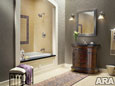
(ARA) - Thinking about updating your bathroom, but not sure what to budget -- or if you’ll even recoup the costs in today’s market? The good news is that modifying a bathroom not only adds daily enjoyment and comfort, but will enhance your home’s value as well.
“Any changes you make on your house now should increase your home value later,” says Kermit Baker, project director for the Remodeling Futures program at Harvard University.
Still not convinced? According to "Consumer Reports," a 5-by-7-foot bathroom remodel, at a national average cost of $15,000, provides a solid return of 78 percent.
Get Started
To make your bathroom transformation pay, begin by creating a list of “must-haves,” “nice ideas” and “dreams.” This will help you understand the numbers before starting your renovation and prioritize what makes the most sense for your investment.
Following are a few bathroom projects, with low- and high-end options, as well as costs to consider before getting started.
* Fixtures
Must-have
Fixtures, including sinks, toilets and tub/showers, are all must-haves in your bathroom according to "House & Home Magazine." Basic versions can cost $350 to $900 to replace, so plan accordingly. Upgrades such as double or undermount sinks, dual-flush toilets or deep soaking tubs can range from approximately $1,300 to $2,250.
Nice Idea
If you don’t want to spend extra money replacing some of the basics, why not give your tub or shower a quick touch-up? Try hiring a surface-restoration company, such as Miracle Method (www.miraclemethod.com). For approximately $465 to $600 you can make your ceramic, porcelain and fiberglass fixtures shine like new.
Dream Big
If you’ve always dreamed of a luxury spa shower and have room in your budget, try installing a custom glass shower enclosure. Retailers, such as The Home Depot offer a variety of glass or glass block options ranging from $2,000 to $3,500 that will have you singing with delight in the shower.
* Faucets
Must-have
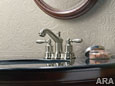
Faucets are not only a must-have, but can also be the focal point in the bathroom. Basic faucets range from $50 to $350 with different finish selections and configurations. Before going faucet shopping, be sure to do your homework and review your sink set-up. Today’s faucets are available in three primary styles: 4-inch centerset (the most popular), 8-inch widespread and single-hole (typically seen in a vessel sink application).
Nice Idea
When looking to replace your faucet, choose one that offers both style and water-saving benefits. Moen’s Lindley bathroom faucet is WaterSense labeled by the Environmental Protection Agency (EPA), indicating it meets guidelines as an environmentally responsible and efficient product.
Lindley offers traditional, mid- and high-arc designs that use 32 percent less water without sacrificing performance. Available at The Home Depot for between $89 and $154, Lindley is offered in today’s most popular finishes including Chrome, LifeShine Classic Brushed Nickel and Old World Bronze.
And with your new hardware updates, don’t forget to add finishing touches with matching accessories such as towel bars, towel rings, robe hooks and pivoting paper holders to help pull the design of the room together. Moen Accessories offers a variety of options starting at only $20.
* Storage and Countertops
Nice Idea
Need more space? Try installing a new or antique dresser-like vanity for approximately $100 to $1,500. It adds storage and style with many options to personalize -- or you can save even more by recycling an old dresser.
Dream Big
If high-end countertops are your dream, add a custom-built vanity. Prices range from $2,000 to $5,000, but allow you to customize dimensions and choose from materials including natural stone, marble, frosted glass or exotic and engineered woods. It’s also a great way to give your bathroom a brand-new look.
* Flooring
Must-have
Going for an upscale look to complete the room without the cost? Try installing ceramic or porcelain tile. For approximately $1 to $3 per square foot, you can choose from a variety of colors, shapes, sizes and finishes.
Nice Idea
Like the idea, but are worried about stepping on to a cold, uninviting floor in the morning? A nice idea is to install an electric floor warming systems for under your tile. Companies such as SunTouch Floor Warming Mats (www.suntouch.com) can help with costs between $400 and $1,600, depending on your bathroom’s size.
Dream Big
Or if you dream of high-end porcelain tile and good-quality stone and glass, options range from $7 to $18 per square foot. Want a customized glass tile mosaic for your bathroom floor instead? For between $20 and $200 per square foot, you can design your own masterpiece without any visible grout lines.
No matter what your budget or dreams, by investing and renovating your bathroom today you will enjoy an improved room for years to come and add some extra cash in your pocket. For more information on Moen’s Lindley bathroom faucet collection available at The Home Depot, visit www.moen.com, or call (800) BUY-MOEN.
Courtesy of ARAcontent
Thursday, February 19, 2009
Going Green and Enhancing Indoor Air Quality
(ARA) - More energy-efficient and airtight homes provide lower carbon emissions, significant energy savings and the psychological boost of knowing we’re all doing something to help preserve the planet – so what’s not to love? Despite the cost savings and environmental benefits, however, modern home building and remodeling can have a hidden downside: poor indoor air quality.
“The Environmental Protection Agency (EPA) tells us that air pollution inside the home can be two to five times higher than outdoor levels,” says Victor Flynn, national marketing manger of Panasonic Home & Environment Company, which manufactures home ventilation products.
Poor indoor air quality has been linked to a host of respiratory ailments, from allergies to asthma. In fact, the EPA’s Web site notes that indoor air pollutants contribute to asthma symptoms, especially among children.
The trend toward more “green,” energy-efficient, airtight homes contributes to poor indoor air quality because “airtight” means airborne pollutants stay trapped inside. However, it is possible to boost your home’s energy efficiency, save money and improve indoor air quality safely. The secret is home ventilation.
Besides being more airtight, many homes these days are built or remodeled using synthetic building materials that may release harmful chemicals into the air. These chemical emissions mix with dust, mold and fumes from common household items like air fresheners and scented candles. Sources of common indoor air pollutants include wet or damp walls, ceilings, carpets and furniture; poorly maintained humidifiers, dehumidifiers and air conditioners; smoke from cigarettes; emissions from petroleum-based candles; moisture and smoke from cooking; and fumes from household items and cleaners.
Moisture and dampness in a home can lead to mold and mildew which can irritate the eyes, nose and throat, cause shortness of breath, dizziness, lethargy, fever and digestive problems. Moisture and mold can also worsen asthma, flu and other respiratory ailments. To minimize moisture in your home, it is good practice to regularly empty water trays in your home’s air conditioners and dehumidifiers; clean and dry or replace water-damaged carpets and building structure and provide adequate ventilation throughout the home.
Go with the Air-flow
In the past, some homeowners and contractors might have shied away from installing vent fans believing they were noisy, used too much energy or wasted heat in the winter and air-conditioned air in the summer. However, times have changed, and technology has advanced, so there are modern ventilation fans are whisper quiet, ENERGY STAR efficient and an affordable way to help maintain your home’s indoor air quality.
Some ventilation fans, like Panasonic’s WhisperGreen line, provide both “intermittent” ventilation to remove steam and odors, and “continuous” low-rate ventilation to remove indoor air pollutants and improve air quality throughout the whole house, even when the bathroom is not in use.
Selected models offer motion sensors and ENERGY STAR-rated light fixtures that use high quality, long-life and flicker-free compact fluorescent lamps designed to match the color of incandescent lights. And Panasonic light fixtures all include a night-light feature.
Throughout the house, an energy recovery ventilator, like WhisperComfort, can help create a comfortable, balanced exchange of air by exhausting indoor air and bringing in fresh outdoor air. Running continuously at a low rate, WhisperComfort units vent indoor air pollutants out of the home and replace stale indoor air with fresh air from outside, improving indoor air quality.
To learn more about Whisper Green and Whisper Comfort fans and how ventilation can help improve your home’s indoor air quality, visit www.panasonic.com/ventfans.
Courtesy of ARAcontent
“The Environmental Protection Agency (EPA) tells us that air pollution inside the home can be two to five times higher than outdoor levels,” says Victor Flynn, national marketing manger of Panasonic Home & Environment Company, which manufactures home ventilation products.
Poor indoor air quality has been linked to a host of respiratory ailments, from allergies to asthma. In fact, the EPA’s Web site notes that indoor air pollutants contribute to asthma symptoms, especially among children.
The trend toward more “green,” energy-efficient, airtight homes contributes to poor indoor air quality because “airtight” means airborne pollutants stay trapped inside. However, it is possible to boost your home’s energy efficiency, save money and improve indoor air quality safely. The secret is home ventilation.
Besides being more airtight, many homes these days are built or remodeled using synthetic building materials that may release harmful chemicals into the air. These chemical emissions mix with dust, mold and fumes from common household items like air fresheners and scented candles. Sources of common indoor air pollutants include wet or damp walls, ceilings, carpets and furniture; poorly maintained humidifiers, dehumidifiers and air conditioners; smoke from cigarettes; emissions from petroleum-based candles; moisture and smoke from cooking; and fumes from household items and cleaners.
Moisture and dampness in a home can lead to mold and mildew which can irritate the eyes, nose and throat, cause shortness of breath, dizziness, lethargy, fever and digestive problems. Moisture and mold can also worsen asthma, flu and other respiratory ailments. To minimize moisture in your home, it is good practice to regularly empty water trays in your home’s air conditioners and dehumidifiers; clean and dry or replace water-damaged carpets and building structure and provide adequate ventilation throughout the home.
Go with the Air-flow
In the past, some homeowners and contractors might have shied away from installing vent fans believing they were noisy, used too much energy or wasted heat in the winter and air-conditioned air in the summer. However, times have changed, and technology has advanced, so there are modern ventilation fans are whisper quiet, ENERGY STAR efficient and an affordable way to help maintain your home’s indoor air quality.
Some ventilation fans, like Panasonic’s WhisperGreen line, provide both “intermittent” ventilation to remove steam and odors, and “continuous” low-rate ventilation to remove indoor air pollutants and improve air quality throughout the whole house, even when the bathroom is not in use.
Selected models offer motion sensors and ENERGY STAR-rated light fixtures that use high quality, long-life and flicker-free compact fluorescent lamps designed to match the color of incandescent lights. And Panasonic light fixtures all include a night-light feature.
Throughout the house, an energy recovery ventilator, like WhisperComfort, can help create a comfortable, balanced exchange of air by exhausting indoor air and bringing in fresh outdoor air. Running continuously at a low rate, WhisperComfort units vent indoor air pollutants out of the home and replace stale indoor air with fresh air from outside, improving indoor air quality.
To learn more about Whisper Green and Whisper Comfort fans and how ventilation can help improve your home’s indoor air quality, visit www.panasonic.com/ventfans.
Courtesy of ARAcontent
Tuesday, February 17, 2009
Flooring 101: Selecting the Best Product for Your Home Style
(ARA) - Your home’s flooring does more than provide you and your family with a comfortable surface. It’s an extension of your personal style and taste. It says something about you and your home to everyone who walks in the door.
Selecting the right floor for your home isn’t easy. Chances are if you’ve visited your local flooring retailer, you’ve found yourself wandering through a sea of options, evaluating different materials, designs and overall durability and function.
The question is: How do you choose when everything looks so good?
You need to consider a few factors, including your style, budget, where the flooring will be installed, traffic flow and performance concerns.
Cost is often a deciding factor. Set a price range and begin evaluating the features of products in that bracket. If you’re not planning to install the floor yourself, don’t forget to factor in the installation costs, which often are in addition to the square-foot cost.
Fashionable features
Appearance is the first factor to consider. The flooring you choose should blend with the style of your home, whether that style is contemporary, Victorian, eclectic or country. Also keep in mind the size of the room where you plan to install the flooring. Tiny tiles will be too busy in a large room, while large-scale products will overwhelm a smaller space.
While many homeowners immediately gravitate to such attractive natural materials as slate, stone, bamboo and hardwood, don’t limit your options simply to those for mere aesthetics’ sake. Modern flooring technology such as resilient and laminate offers the best of both worlds -- good looks, comfort, function and easy maintenance.
“Today’s laminate and resilient flooring options offer many attractive features that rival, and even surpass, those of their natural counterparts,” says Gary Finseth, Tarkett Residential marketing director. “Not only do laminate and resilient flooring cost less than wood and ceramic tile, they come in a wide range of colors and patterns that authentically mimic traditional wood grains, natural stone, ceramic and even metallics. There’s something for every decor.”
Chic comfort
Beyond aesthetics, contemporary flooring options also hold up to the demands of everyday living comfortably. Comfort of flooring refers to how it feels underfoot. It also includes its insulation properties and whether or not it carries sound. Other products, such as resilient and laminate flooring, have been engineered to provide the best of both worlds.
FiberFloor resilient flooring from Tarkett, for example, features more than 200 distinctive colors and designs, including natural-looking wood grains like oak or exotic teak, rustic tiles and earthy stone looks, but also offers improved foam density for added performance and durability, as well as warmth, comfort and a quiet living space.
Defined durability
It’s a given that hardwood or tile floors look great in most spaces, but too often, these floors don’t hold up to the rigors of everyday traffic and living. Consider how the flooring you want to install will react to such factors as direct sunlight, water spills, furniture scrapes, tracked-in dirt and ongoing foot traffic and how they will hold up to cleaning, too.
For those who seek a true visual match to real wood, consider installing laminate flooring. In addition to providing high style, this flooring reflects the look of real wood yet holds up to extensive wear and tear.
Tarkett laminates feature an AC4-rating for the commercial wear layer, which means this flooring protects against wear, fading and stains 60 percent better than ordinary laminate flooring. The design layer replicates the beauty of natural wood grains, while the Americore layer, the inner core board manufactured with only cherry and oak chips, provides superior indentation resistance.
Other considerations
Some floors are easier to install than others. Hardwood and tile floors are among the most difficult to install and generally require professional expertise.
Thanks to its multi-layer construction, resilient tiles simply can be set in place. And because of its layered construction, this flooring will not expand or contract. It also lies flat and stays flat by “floating” in place, without the need for glue. Laminate flooring also requires no glue or nails unlike traditional hardwood.
Flooring systems that don’t require glue aren’t just easy to install. They also help the environment. All Tarkett resilient and laminate products are FloorScore certificated for meeting rigorous indoor air quality standards.
Don’t forget about warranties. Some products have limited lifetime warranties, while others have at least 10- to 15-year warranties, ensuring your flooring’s beauty for a long time into the future.
Courtesy of ARAcontent
Selecting the right floor for your home isn’t easy. Chances are if you’ve visited your local flooring retailer, you’ve found yourself wandering through a sea of options, evaluating different materials, designs and overall durability and function.
The question is: How do you choose when everything looks so good?
You need to consider a few factors, including your style, budget, where the flooring will be installed, traffic flow and performance concerns.
Cost is often a deciding factor. Set a price range and begin evaluating the features of products in that bracket. If you’re not planning to install the floor yourself, don’t forget to factor in the installation costs, which often are in addition to the square-foot cost.
Fashionable features
Appearance is the first factor to consider. The flooring you choose should blend with the style of your home, whether that style is contemporary, Victorian, eclectic or country. Also keep in mind the size of the room where you plan to install the flooring. Tiny tiles will be too busy in a large room, while large-scale products will overwhelm a smaller space.
While many homeowners immediately gravitate to such attractive natural materials as slate, stone, bamboo and hardwood, don’t limit your options simply to those for mere aesthetics’ sake. Modern flooring technology such as resilient and laminate offers the best of both worlds -- good looks, comfort, function and easy maintenance.
“Today’s laminate and resilient flooring options offer many attractive features that rival, and even surpass, those of their natural counterparts,” says Gary Finseth, Tarkett Residential marketing director. “Not only do laminate and resilient flooring cost less than wood and ceramic tile, they come in a wide range of colors and patterns that authentically mimic traditional wood grains, natural stone, ceramic and even metallics. There’s something for every decor.”
Chic comfort
Beyond aesthetics, contemporary flooring options also hold up to the demands of everyday living comfortably. Comfort of flooring refers to how it feels underfoot. It also includes its insulation properties and whether or not it carries sound. Other products, such as resilient and laminate flooring, have been engineered to provide the best of both worlds.
FiberFloor resilient flooring from Tarkett, for example, features more than 200 distinctive colors and designs, including natural-looking wood grains like oak or exotic teak, rustic tiles and earthy stone looks, but also offers improved foam density for added performance and durability, as well as warmth, comfort and a quiet living space.
Defined durability
It’s a given that hardwood or tile floors look great in most spaces, but too often, these floors don’t hold up to the rigors of everyday traffic and living. Consider how the flooring you want to install will react to such factors as direct sunlight, water spills, furniture scrapes, tracked-in dirt and ongoing foot traffic and how they will hold up to cleaning, too.
For those who seek a true visual match to real wood, consider installing laminate flooring. In addition to providing high style, this flooring reflects the look of real wood yet holds up to extensive wear and tear.
Tarkett laminates feature an AC4-rating for the commercial wear layer, which means this flooring protects against wear, fading and stains 60 percent better than ordinary laminate flooring. The design layer replicates the beauty of natural wood grains, while the Americore layer, the inner core board manufactured with only cherry and oak chips, provides superior indentation resistance.
Other considerations
Some floors are easier to install than others. Hardwood and tile floors are among the most difficult to install and generally require professional expertise.
Thanks to its multi-layer construction, resilient tiles simply can be set in place. And because of its layered construction, this flooring will not expand or contract. It also lies flat and stays flat by “floating” in place, without the need for glue. Laminate flooring also requires no glue or nails unlike traditional hardwood.
Flooring systems that don’t require glue aren’t just easy to install. They also help the environment. All Tarkett resilient and laminate products are FloorScore certificated for meeting rigorous indoor air quality standards.
Don’t forget about warranties. Some products have limited lifetime warranties, while others have at least 10- to 15-year warranties, ensuring your flooring’s beauty for a long time into the future.
Courtesy of ARAcontent
Monday, February 16, 2009
Jump-start the Spring Growing Season
(ARA) – If you invest a bit of time now, you can ensure a bountiful harvest and a beautiful landscape to make this your best gardening season yet. Preparing a strong spring foundation means new plantings are better able to survive the heat, drought and pest attacks of summer.
“Start your garden off right by adding several inches of organic matter to the top 6- to 12- inches of soil,” recommends horticulture expert and author Melinda Myers. “Peat moss, compost, aged manure and other organic materials improve drainage in heavy clay soil and increase the water holding capacity of sandy soils.”
Incorporate a slow-release, low-nitrogen fertilizer like Milorganite before planting flowers and vegetables. “I like Milorganite’s low nitrogen formulation” says Myers. “This makes it goof proof so you will not harm young tender plants no matter what your gardening skill. Its slow-release nitrogen encourages overall growth without preventing flowering and fruit production that can occur when too much nitrogen is applied.”
Reduce weed problems and increase the health and vigor of your lawn by properly mowing, watering and fertilizing. “Mow high to encourage deep roots that are more pest- and drought-resistant,” Myers suggests. “Taller grass is better able to fend off weeds.” Mow often and leave the short clippings on the lawn to add nutrients, organic matter and moisture to the soil. Use a sharp blade for quicker recovery and a better-looking lawn.
Water thoroughly but less frequently to encourage deep roots. Water your lawn early in the morning to minimize water loss. If you allow your lawn to go dormant during drought, leave it dormant until temperatures cool, rains return and nature brings it back to life.
Use a low-nitrogen, slow-release fertilizer for your spring feeding. An organic nitrogen type fertilizer will not promote lush growth that is more susceptible to disease and requires more mowing. Plus if you stop watering or your community institutes a watering ban, it won’t damage the lawn. In fact, the fertilizer will stay in the soil until the weather improves and your lawn starts to grow.
Improve the health of trees and shrubs with proper watering and mulch. Water new plantings whenever the top few inches of soil are dry. Don’t forget about established plants. These need a helping hand during extended periods of drought. Always water thoroughly to encourage deep drought-resistant roots.
Maintain a 2- to 3-inch layer of mulch around trees and shrubs. Woodchips, shredded bark and other organic materials help conserve moisture, suppress weeds and improve the soil as they decompose. Keep mulch away from the trunk of trees and crowns of other plants to reduce the risk of disease.
Myers suggests you create or expand existing mulch rings without the use of chemicals. She says it’s simple, “Just edge the mulch bed, cut the existing grass short, spread a layer of newspaper or cardboard over the area and cover with woodchips or shredded bark. The paper provides an extra weed barrier and eventually breaks down adding organic matter to the soil.”
Use an all-purpose fertilizer to give existing trees, shrubs and perennials a nutrient boost. A low-nitrogen, slow-release formula encourages moderate growth that needs less pruning and is less susceptible to certain pests.
And don’t forget to take a moment to enjoy the beauty of spring while preparing your landscape for the season ahead.
Courtesy of ARAcontent
“Start your garden off right by adding several inches of organic matter to the top 6- to 12- inches of soil,” recommends horticulture expert and author Melinda Myers. “Peat moss, compost, aged manure and other organic materials improve drainage in heavy clay soil and increase the water holding capacity of sandy soils.”
Incorporate a slow-release, low-nitrogen fertilizer like Milorganite before planting flowers and vegetables. “I like Milorganite’s low nitrogen formulation” says Myers. “This makes it goof proof so you will not harm young tender plants no matter what your gardening skill. Its slow-release nitrogen encourages overall growth without preventing flowering and fruit production that can occur when too much nitrogen is applied.”
Reduce weed problems and increase the health and vigor of your lawn by properly mowing, watering and fertilizing. “Mow high to encourage deep roots that are more pest- and drought-resistant,” Myers suggests. “Taller grass is better able to fend off weeds.” Mow often and leave the short clippings on the lawn to add nutrients, organic matter and moisture to the soil. Use a sharp blade for quicker recovery and a better-looking lawn.
Water thoroughly but less frequently to encourage deep roots. Water your lawn early in the morning to minimize water loss. If you allow your lawn to go dormant during drought, leave it dormant until temperatures cool, rains return and nature brings it back to life.
Use a low-nitrogen, slow-release fertilizer for your spring feeding. An organic nitrogen type fertilizer will not promote lush growth that is more susceptible to disease and requires more mowing. Plus if you stop watering or your community institutes a watering ban, it won’t damage the lawn. In fact, the fertilizer will stay in the soil until the weather improves and your lawn starts to grow.
Improve the health of trees and shrubs with proper watering and mulch. Water new plantings whenever the top few inches of soil are dry. Don’t forget about established plants. These need a helping hand during extended periods of drought. Always water thoroughly to encourage deep drought-resistant roots.
Maintain a 2- to 3-inch layer of mulch around trees and shrubs. Woodchips, shredded bark and other organic materials help conserve moisture, suppress weeds and improve the soil as they decompose. Keep mulch away from the trunk of trees and crowns of other plants to reduce the risk of disease.
Myers suggests you create or expand existing mulch rings without the use of chemicals. She says it’s simple, “Just edge the mulch bed, cut the existing grass short, spread a layer of newspaper or cardboard over the area and cover with woodchips or shredded bark. The paper provides an extra weed barrier and eventually breaks down adding organic matter to the soil.”
Use an all-purpose fertilizer to give existing trees, shrubs and perennials a nutrient boost. A low-nitrogen, slow-release formula encourages moderate growth that needs less pruning and is less susceptible to certain pests.
And don’t forget to take a moment to enjoy the beauty of spring while preparing your landscape for the season ahead.
Courtesy of ARAcontent
Subscribe to:
Posts (Atom)

 Posts
Posts

